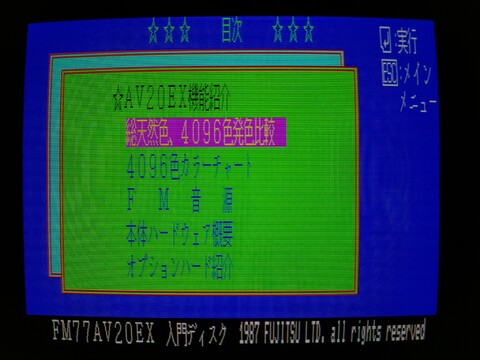
This begins sort of the core content of the disk. You’ve been warned not to flush your floppy disks down the toilet and you’ve become a master typist, now it’s time to see what makes this computer special! On today’s menu, we have:
– 4096-color generator mode comparison
– 4096 color chart
– FM sound synthesizer
– System specs
– Optional devices
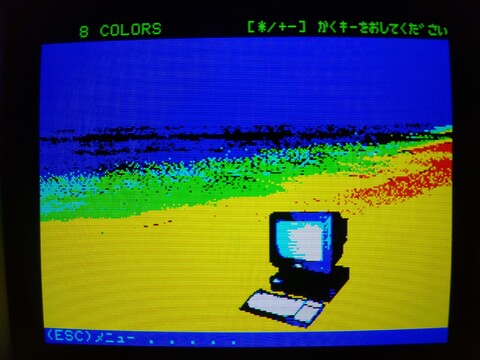
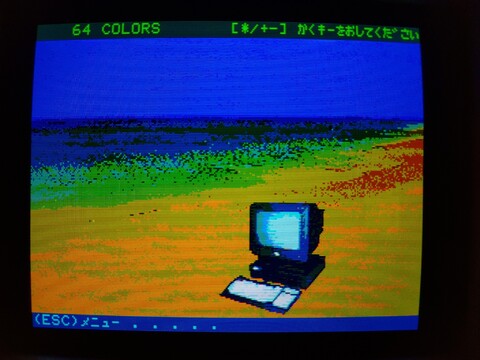
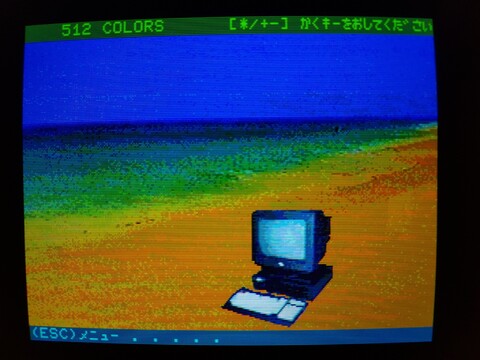
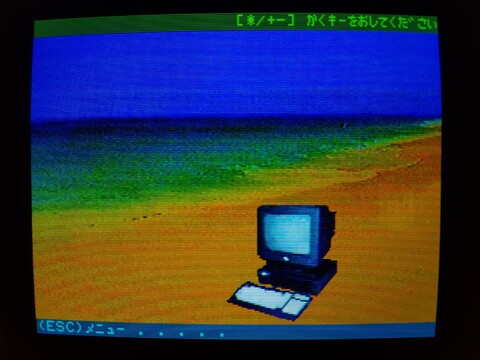
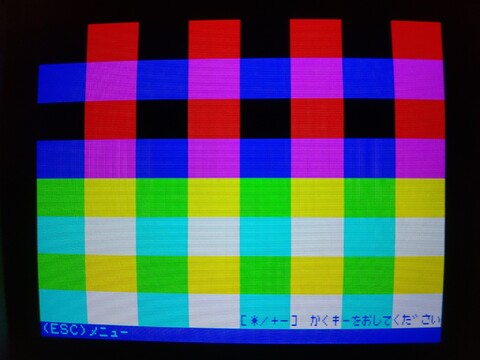
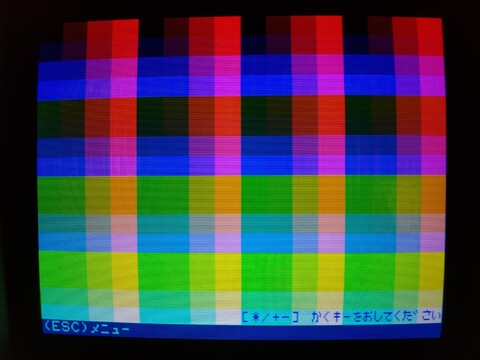
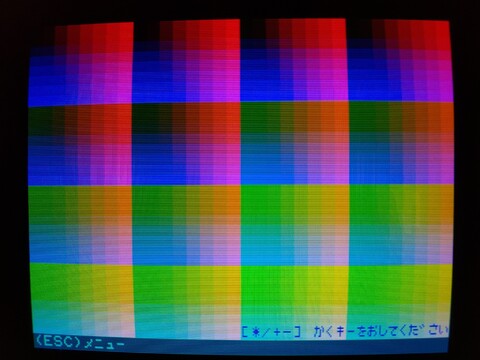
First the color mode test. A scenic picture with an FM77AV20EX “photoshopped” in place. More on this in article 5. The progression goes from 8 colors to 64 colors to 512 colors and finally 4096 colors.
Look at that, 4096 colors. In 1987, I was still limited to 16 colors on my Commodore 64 or 128 (I forget when I actually upgraded). Look, I’m not knocking Commodore by a long shot, I have such a history with it. But this is 4096 colors! It has the same amount of RAM as the C128, so how does it squeeze out those extra colors? Blunt force. There’s a solid 96KB of video memory. I really should check into whether there was any sort of demo scene or art scene active from this era, because I’m certain it could be pushed much further than this picture shows.
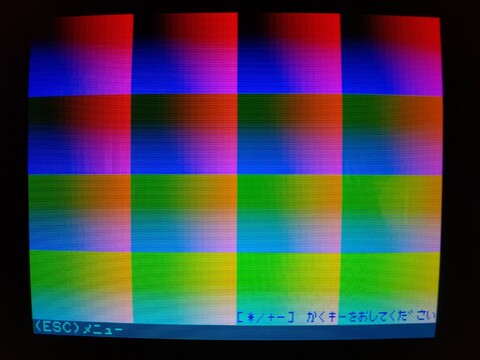
Next is the color chart. Same concept, same progression.
It kind of looks less impressive shown this way, but we have seen a couple of examples already of how this can be used to good effect.
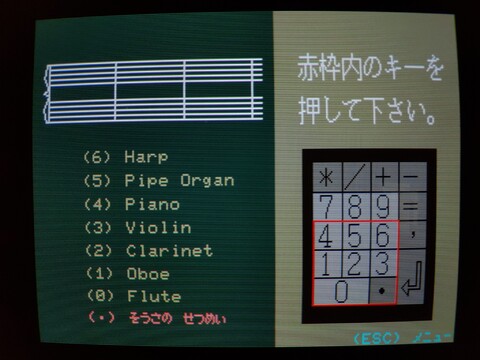
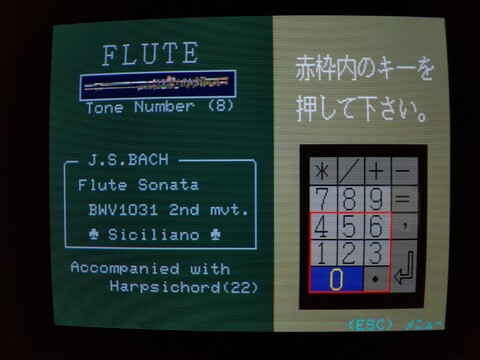
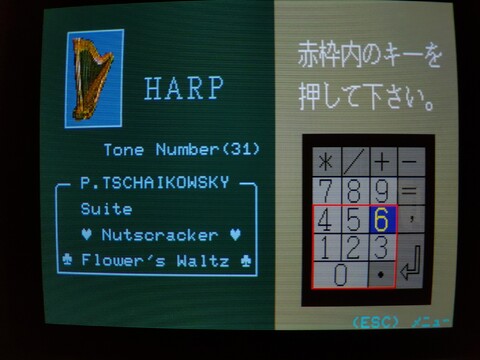
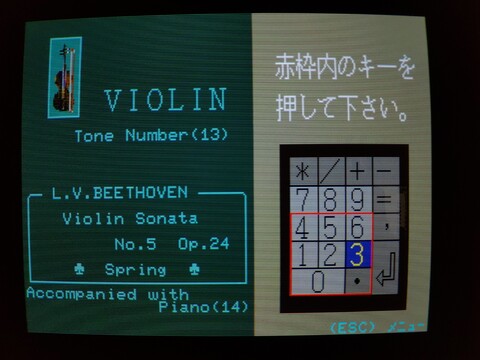
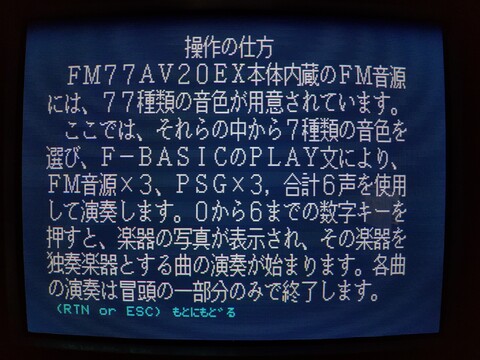
Third from this list is the FM sound synthesizer. It seems that the FM77 got its name from the fact that there are 77 instrument samples, and this demo highlights seven of them. The text is just a brief explanation of the utility.
I really ought to record some audio here, not because any single piece of music is that impressive sounding, but to give an idea of how clear the sound comes through. And again, I now want to search down more compositions.
Well, that concludes the exciting, multimedia portion of this menu branch. But we have a bit more content, continuing with the system specs:
It’s straightforward enough you probably don’t need much Japanese to figure it out. The CPU is a 6809 and it also has a 6809 for a “sub-CPU”. I’m not sure offhand what a sub-CPU means. I don’t think it’s exactly dual-processor, but perhaps delegates secondary tasks or something? The main RAM can be upgraded to 192KB, and it also has a 128KB kanji ROM.
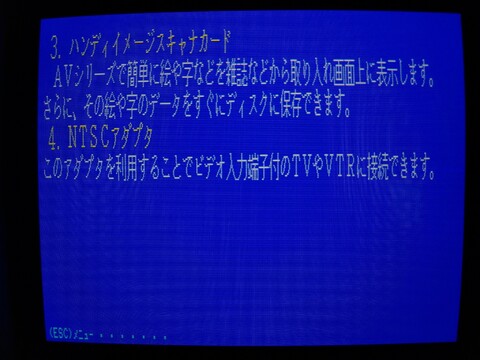
Finally, optional devices. It’s broken down into three categories – audio, visual, and communications.
Audio:
1. Music Stereo Box – provides up to 8 FM voices at the same time through stereo channels (standard is 3). It provides an MML sequencer (music macro language) that allows for midi synchronization.
2. MIDI add-on – adds MIDI connectivity addressable through the BASIC PLAY command so no additional expensive software is necessary, but some programs are supported.
3. Voice synthesizer – add Japanese voice to your applications or reports.
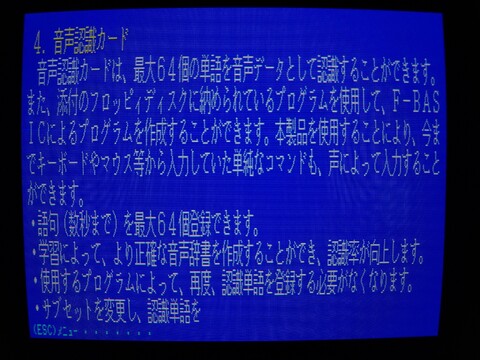
4. Voice recognition – issue 64 different voice commands, and to customize your own command set.
Video:
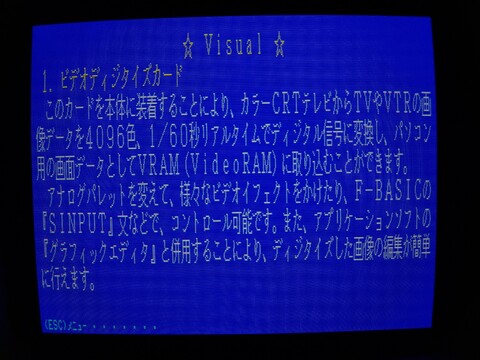
1. Video digitizer card – real-time digitization of video images from TV or VCR. It converts them to 4096 color images in realtime (1/60 of a second) and dumps it to video RAM.
2. Video card – converts analog RGB signal to NTSC video signal. This can also be used to superimpose video signal and create videos for recording to a VCR.
3. Handy Image Scanner card – digitize materials and save them to disk.
4. NTSC adapter – Connect a TV or VCR to your FM77AV20EX
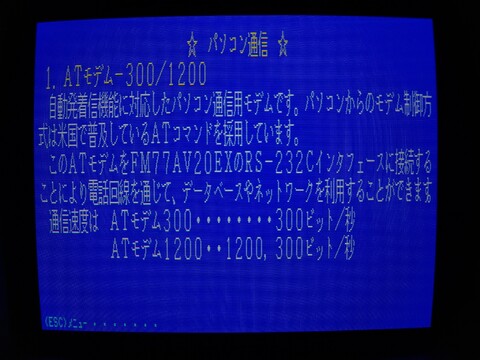
Communication: